What Conditions Does Occupational Therapy Treat?
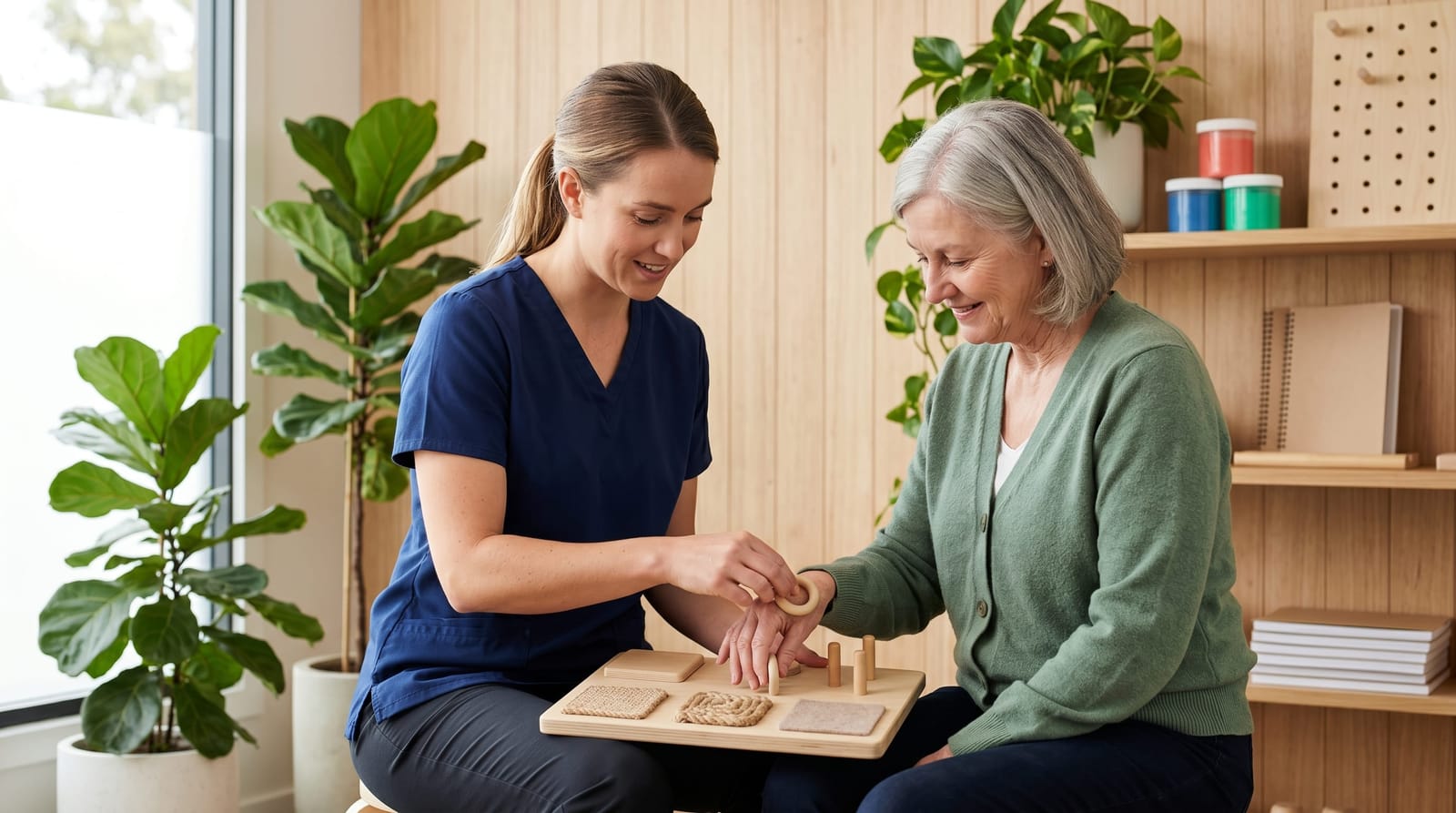
If you've been injured, had surgery, or noticed that daily tasks have become harder to manage, you may be wondering whether occupational therapy is right for you. It's a fair question — and one that more people in the Inland Empire are asking every day. Occupational therapy treats a wide range of physical, neurological, and age-related conditions. At Serenity J in Rancho Cucamonga, our occupational therapy program helps patients across all of these categories rebuild independence and return to the lives they love.
Workplace Injuries and Repetitive Strain Conditions
Workplace injuries are one of the most common reasons people seek occupational therapy. According to the Bureau of Labor Statistics, over 2.8 million nonfatal workplace injuries and illnesses are reported in the U.S. each year. Many of these involve the hands, wrists, shoulders, and back — exactly the body parts that occupational therapy specializes in treating.
What conditions does occupational therapy treat in a work injury context? Common examples include:
- Carpal tunnel syndrome from repetitive keyboard or assembly-line work
- Rotator cuff injuries from overhead lifting or reaching
- Tendinitis in the elbow or forearm from repetitive tool use
- Lower back strains from prolonged sitting or heavy lifting
- Trigger finger from gripping equipment for extended periods
Occupational therapists don't just treat the injury itself. They analyze how you perform your job tasks and identify the movements that caused harm. Then they teach safer techniques and provide adaptive equipment to prevent re-injury. For injured workers in Rancho Cucamonga, this return-to-work focus is often what makes occupational therapy the most effective treatment option available.
Post-Surgical Recovery and Orthopedic Conditions
Surgery repairs the structure. Occupational therapy restores the function. These two goals are different — and both matter. Research shows that patients who participate in structured rehabilitation after surgery return to normal activity up to 40% faster than those who rest alone.
At Serenity J, post-surgical occupational therapy is one of the most frequently requested services. Conditions treated during recovery include:
- Hand and wrist surgery recovery (fractures, ligament repairs, tendon reconstruction)
- Shoulder replacement or repair rehabilitation
- Elbow surgery recovery, including ulnar nerve transposition
- Hip and knee replacement follow-up to restore safe movement patterns
- Spinal surgery recovery focused on safe body mechanics and daily activity
Post-surgical occupational therapy also addresses scar tissue management and edema control. These are often overlooked in standard recovery plans. Reducing scar adhesion early can significantly improve long-term range of motion. Your occupational therapist at Serenity J will build a recovery plan around your specific surgery type and personal daily life goals — not a one-size-fits-all protocol.
Neurological Conditions Affecting Daily Function
Neurological conditions affect millions of Americans. The CDC estimates that stroke alone affects approximately 795,000 people in the U.S. every year. Many neurological conditions directly impair a person's ability to dress, cook, write, or care for themselves independently. Occupational therapy is one of the most effective interventions available for restoring these skills.
Neurological conditions that occupational therapy treats include:
- Stroke: Retraining arm and hand movement, improving balance, and rebuilding cognitive skills for daily tasks
- Traumatic brain injury (TBI): Addressing memory, attention, visual processing, and physical coordination
- Multiple sclerosis (MS): Managing fatigue, spasticity, and fine motor difficulties
- Parkinson's disease: Improving handwriting, grip strength, and fall prevention strategies
- Peripheral neuropathy: Addressing numbness, weakness, and sensation changes in the hands and feet
Neurological occupational therapy focuses on neuroplasticity — the brain's ability to form new connections when guided by consistent, purposeful movement practice. At Serenity J, our therapists use hands-on techniques and activity-based therapy to support this process in a calm, focused environment.
Chronic Pain and Musculoskeletal Conditions
Chronic pain affects an estimated 50 million adults in the United States. It's one of the most debilitating and misunderstood conditions occupational therapy treats. Unlike acute injuries, chronic pain changes the way people move, think, and engage with daily life. Occupational therapy addresses all three of those dimensions.
Musculoskeletal and chronic pain conditions commonly treated through occupational therapy include:
- Rheumatoid arthritis and osteoarthritis affecting hand and joint function
- Fibromyalgia causing widespread pain and activity limitations
- Complex regional pain syndrome (CRPS)
- Chronic neck and shoulder pain from postural dysfunction
- De Quervain's tenosynovitis and other overuse syndromes
Occupational therapy for chronic pain doesn't focus solely on eliminating pain. It focuses on helping patients do more despite pain — using pacing strategies, joint protection techniques, and activity modification. This practical, functional approach is what separates occupational therapy from standard pain management programs.
If you're unsure whether occupational therapy or physical therapy is the right fit for your condition, understanding the difference between the two disciplines can help clarify which path makes the most sense for your specific goals.
Age-Related Functional Decline and Fall Prevention
Aging naturally changes how the body performs. Grip strength, balance, coordination, and visual processing all decline with age. The CDC reports that 1 in 4 adults over age 65 falls each year — and falls are the leading cause of injury-related death in older adults. Occupational therapy is one of the most evidence-supported interventions for preventing falls and preserving independence.
Age-related conditions that occupational therapy addresses include:
- General deconditioning and loss of upper extremity strength
- Balance disorders that increase fall risk
- Low vision adaptations for daily living safety
- Dementia and cognitive decline affecting safety in daily routines
- Post-fall recovery and confidence rebuilding
At Serenity J in Rancho Cucamonga, occupational therapy for older adults is designed to be both clinically rigorous and deeply respectful of each person's goals. Whether the priority is cooking independently, driving safely, or simply getting dressed without assistance, our therapists build the program around what matters most to you.
Frequently Asked Questions
Is occupational therapy only for people with severe disabilities?
No. Occupational therapy treats a broad spectrum of conditions — from mild repetitive strain injuries to complex neurological diagnoses. Many patients seek occupational therapy after a minor surgery or a workplace injury that has not fully healed. If a condition is limiting your ability to perform daily tasks, occupational therapy may be appropriate for you.
How do I know if my condition qualifies for occupational therapy?
A good starting point is to ask: "Is this condition limiting my ability to work, care for myself, or do things I enjoy?" If the answer is yes, occupational therapy is likely worth exploring. At Serenity J, we offer consultations to help you determine whether occupational therapy is the right fit for your specific situation.
Does occupational therapy require a doctor's referral?
In many cases, yes — particularly for workers' compensation cases or insurance-covered treatment. However, referral requirements vary by insurance plan and condition. We recommend contacting Serenity J directly to confirm the requirements for your specific situation before scheduling.
How long does occupational therapy treatment typically take?
Treatment length depends on the condition, its severity, and the patient's goals. Some patients complete their goals in 6 to 8 sessions. Others with complex neurological or chronic conditions may benefit from several months of structured therapy. Your occupational therapist will set clear, measurable goals and adjust the plan as you progress.
Conclusion
Occupational therapy treats a wide range of conditions — from carpal tunnel syndrome and post-surgical recovery to stroke rehabilitation and age-related functional decline. The common thread is function: helping real people do the real tasks that matter to them. At Serenity J in Rancho Cucamonga, our occupational therapy services are built around your specific condition and your personal goals. If any of the conditions above sound familiar, we encourage you to reach out and learn how occupational therapy can help you move forward.